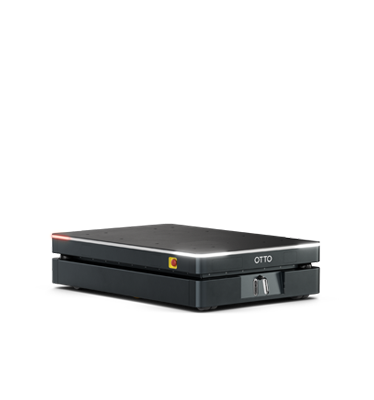
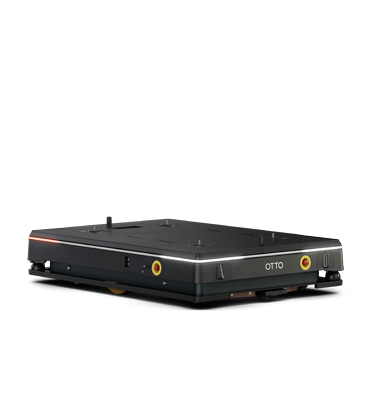
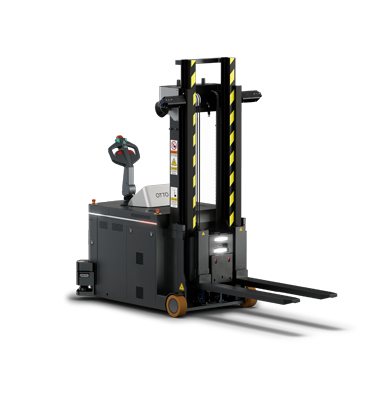
AMRs and AGVs Comparison: Key Differences, Benefits, and Choosing the Right Robot
Discover the key benefits of Autonomous Mobile Robots (AMRs) over Automated Guided Vehicles (AGVs) to help you choose the right material handling solution for your facility.
- Navigation
- Infrastructure
- Intelligence
- Obstacles
- Adaptability
- Environment
- Scalability
- Infrastructure
What site modifications are required to implement the AMR and AGV?
- Intelligence
Where is control for the AMR and AGV maintained?
- Obstacles
How does the AMR and AGV respond to unexpected obstacles in its path?
- Adaptability
How does the AMR and AGV respond to unplanned workflow changes or new tasks?
- Environment
What type of environment and interactions best suit the AMR and AGV?
- Scalability
How easy it is to make changes to the AMR and AGV’s map, workflow, and fleet size?
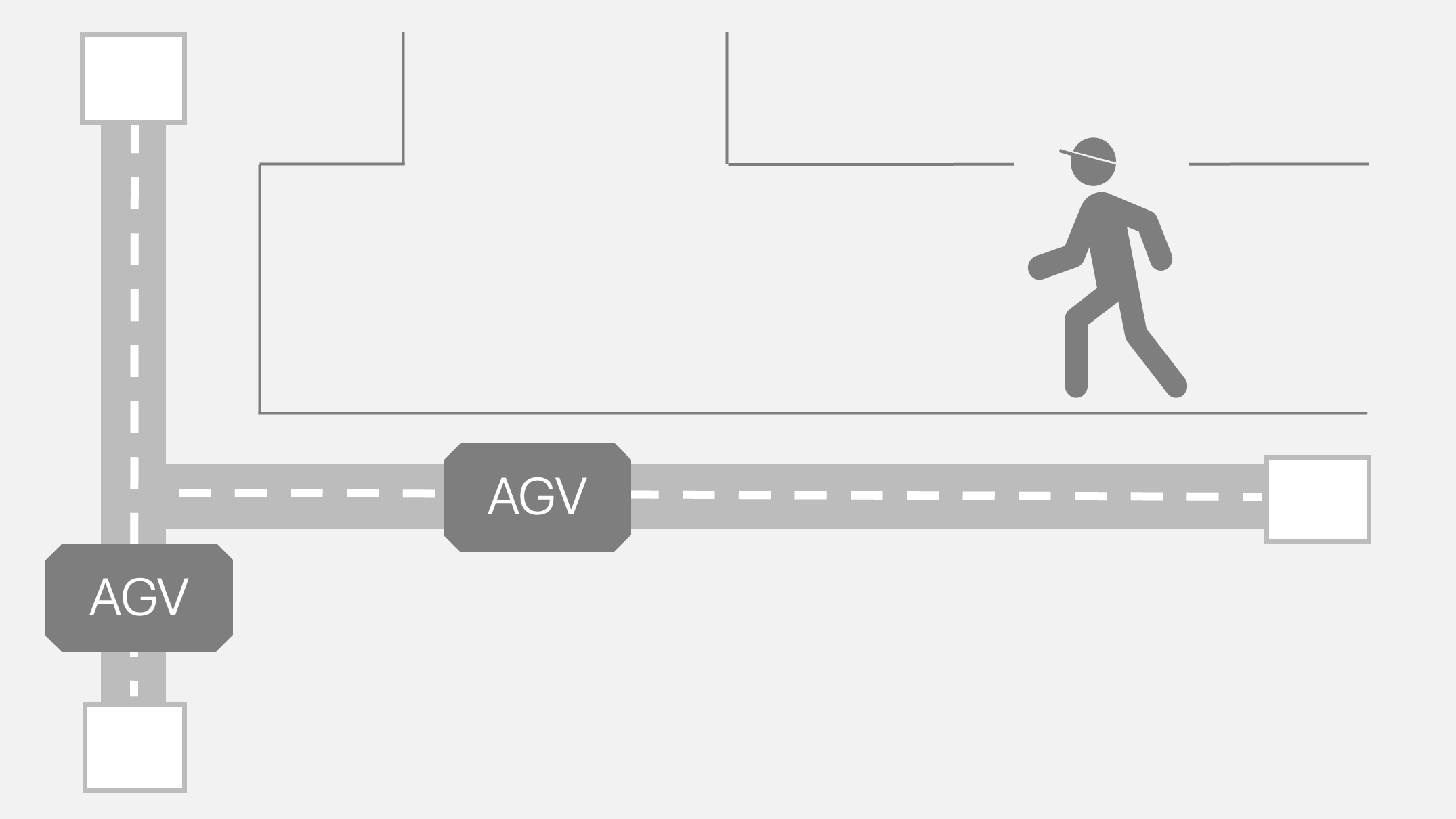
How does the AMR and AGV find its way around the site?

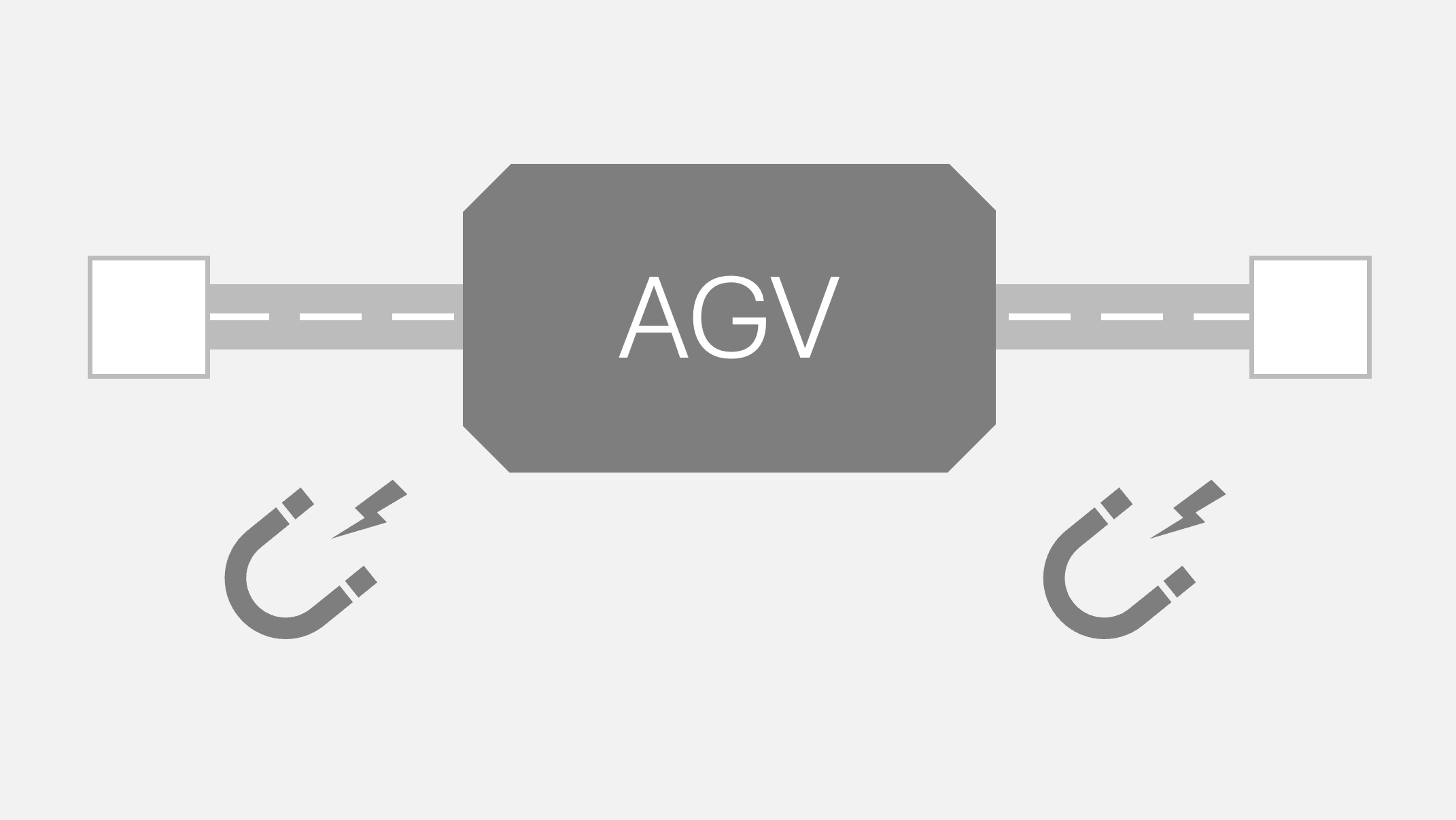
01/02
Autonomous: the robot’s sensors use landmarks to determine its real-time position on an internal map to navigate the site.
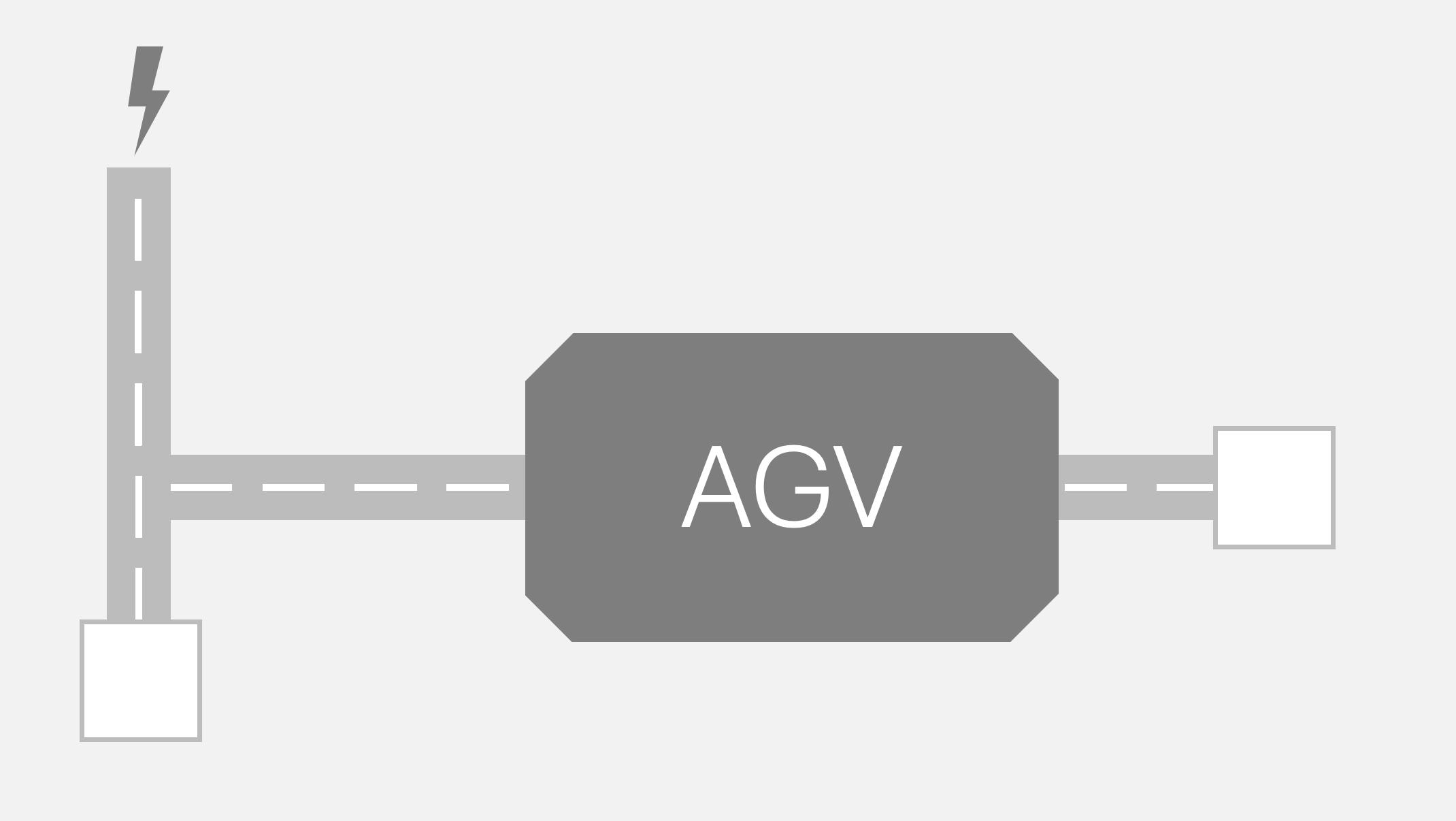
What site modifications are required to implement the AMR and AGV?

01/02
Requires minor changes: adjusting aisle widths, placing battery charging stations, and optimizing the Wi-Fi network.
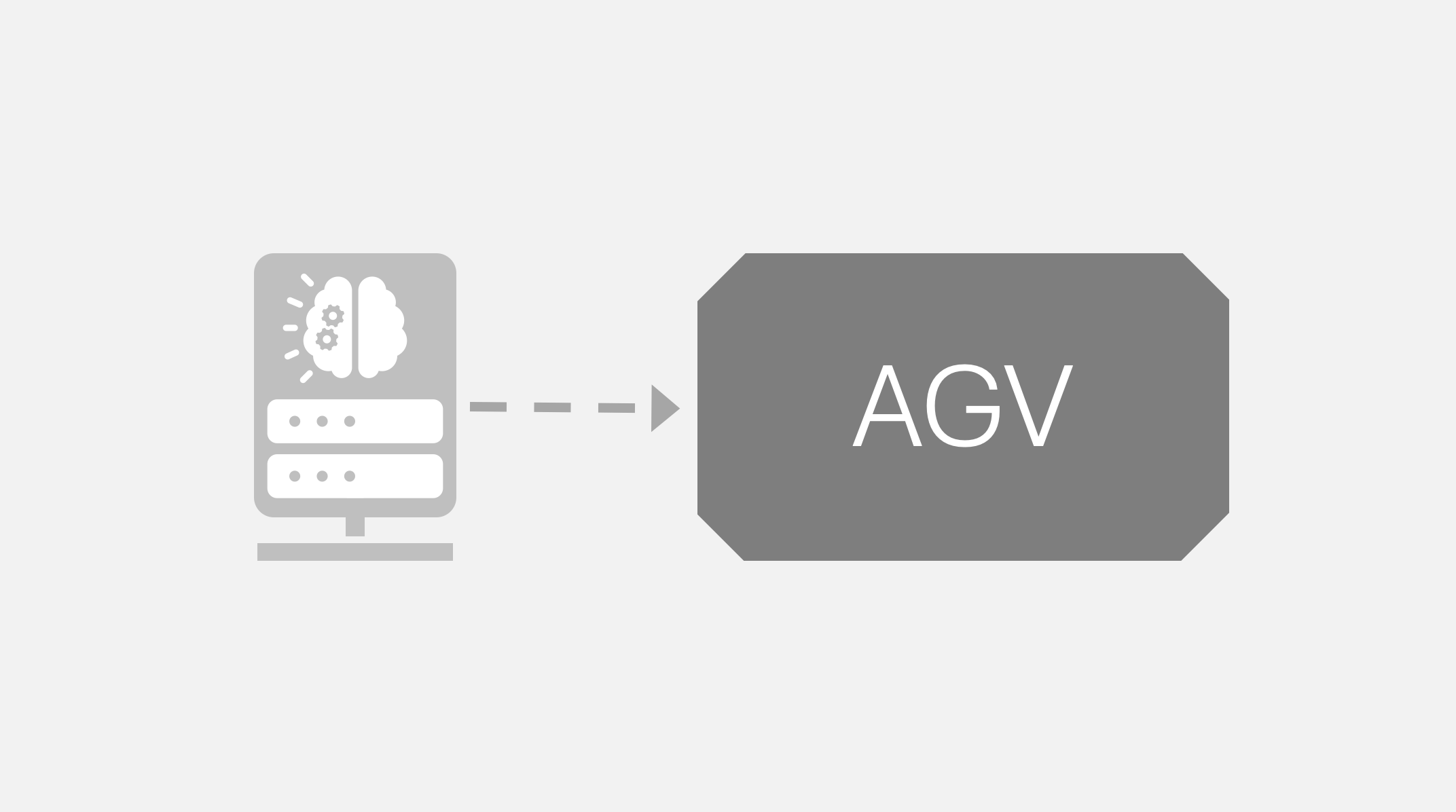
Where is control for the AMR and AGV maintained?

01/02
Onboard intelligence: the robot decides in real time the best route to take, traveling the fastest speed possible without compromising safety.
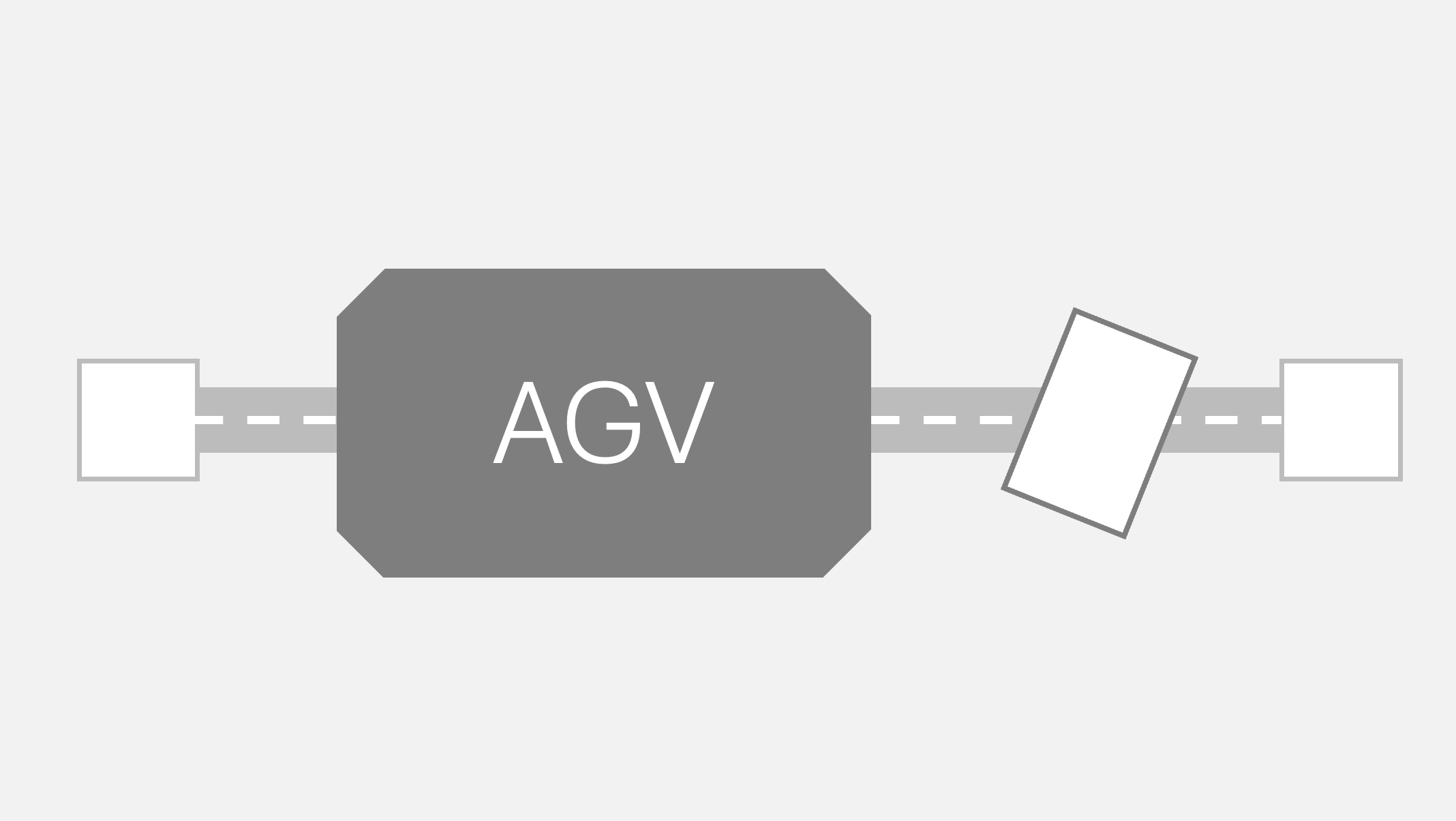
How does the AMR and AGV respond to unexpected obstacles in its path?

01/02
The robot automatically reroutes itself around obstacles, continuing to its destination without manual intervention.
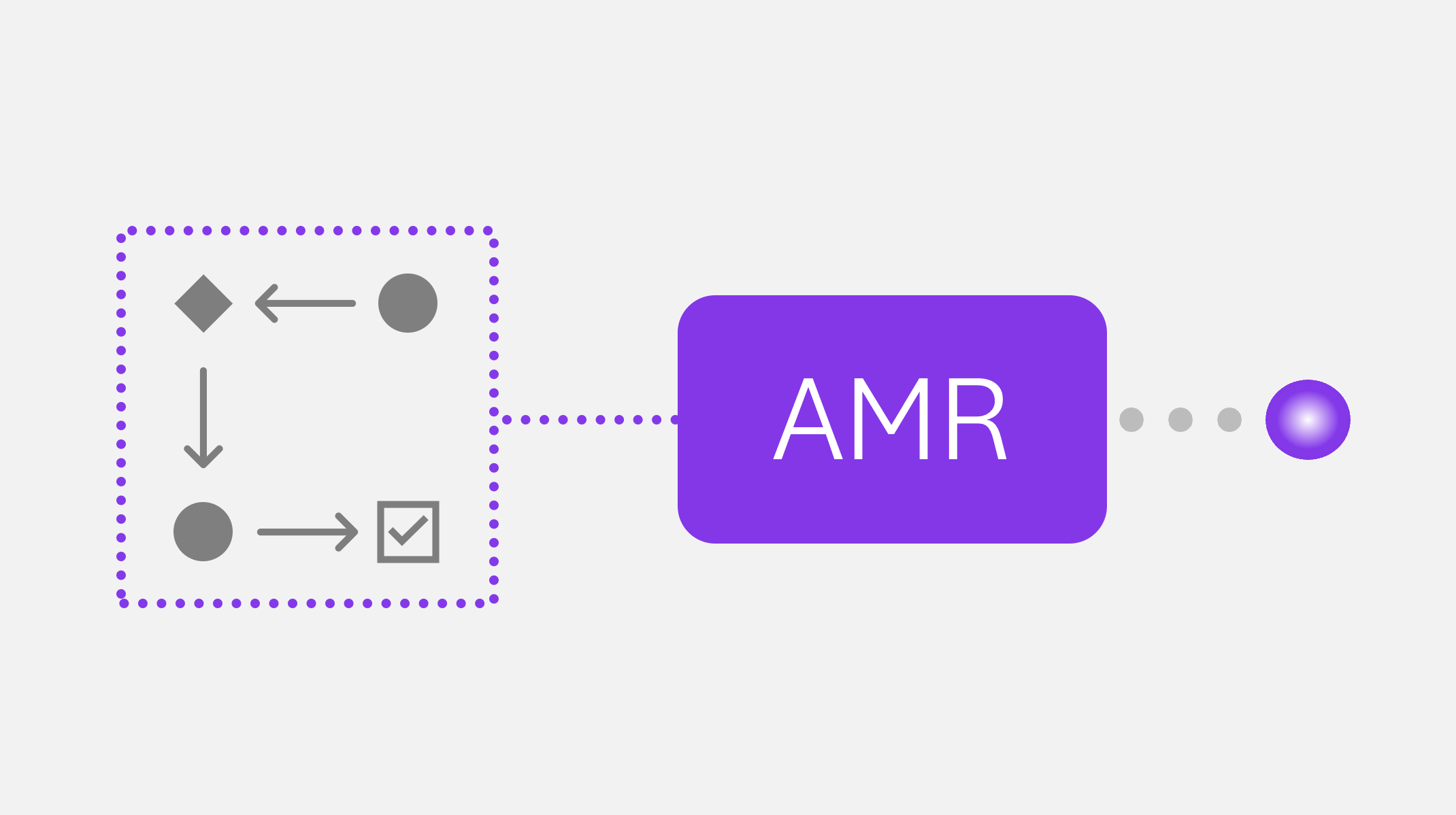
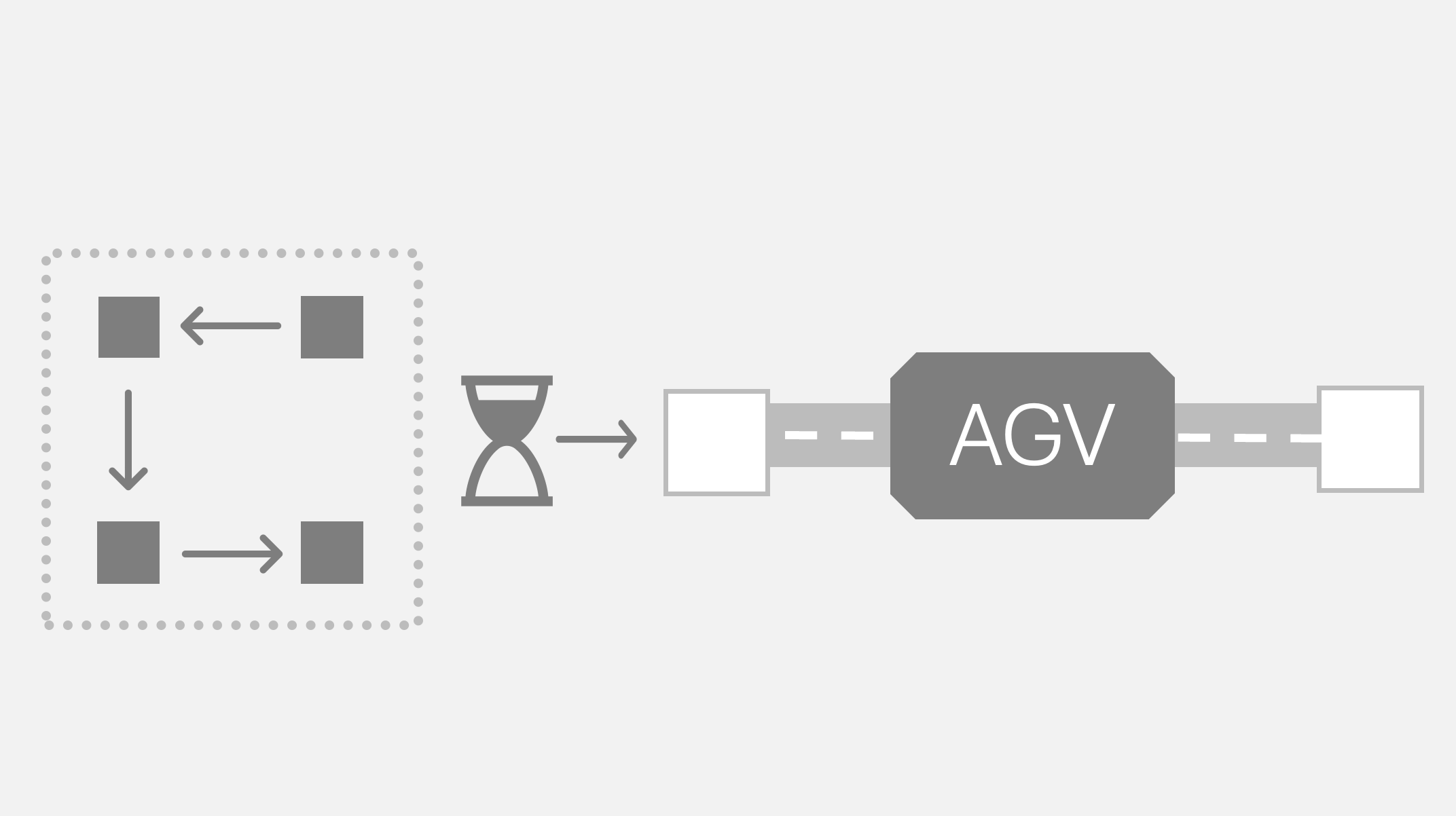
How does the AMR and AGV respond to unplanned workflow changes or new tasks?
01/02
The robot adapts independently to unplanned workflow changes and new tasks, creating new routes to maintain productivity.
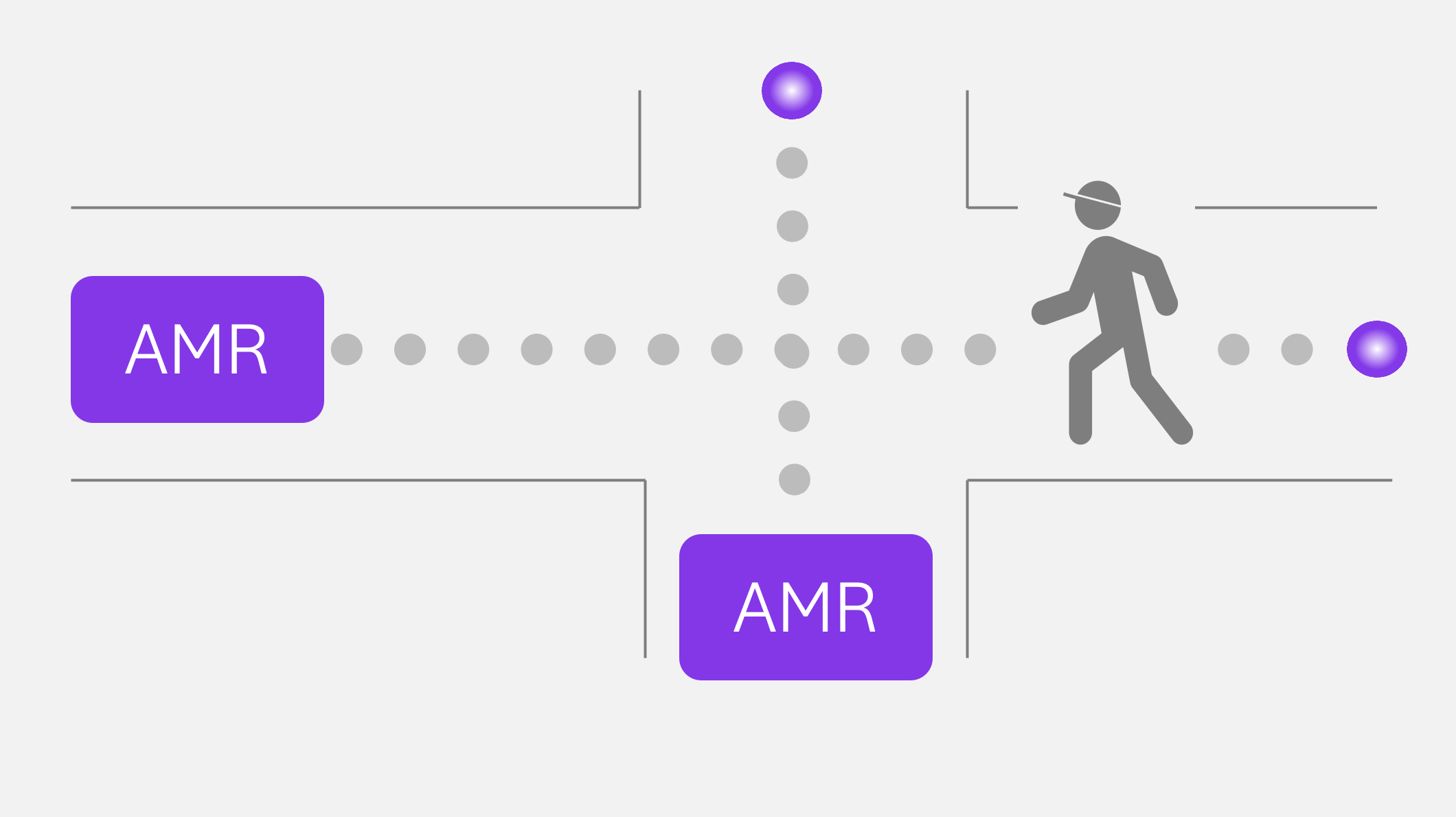
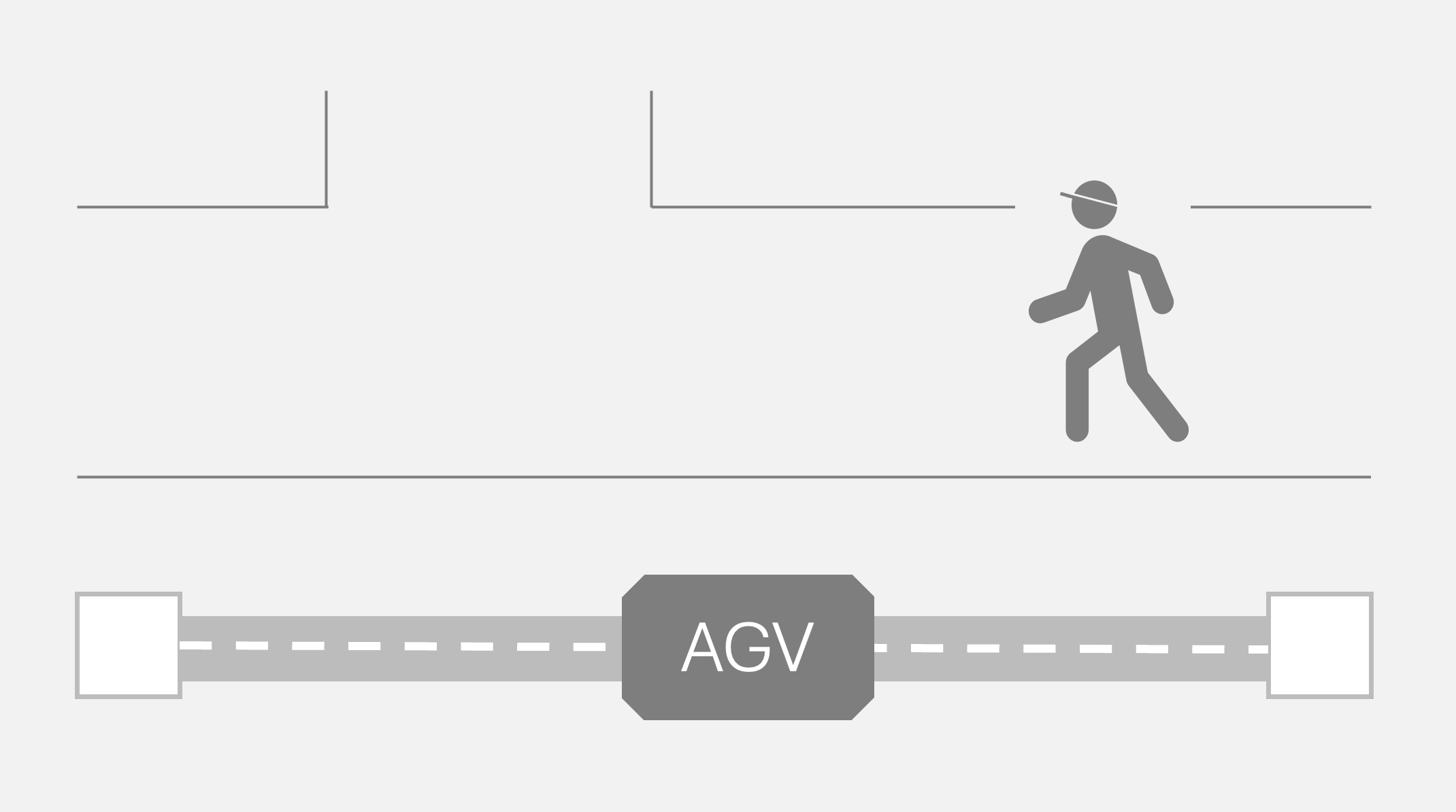
What type of environment and interactions best suit the AMR and AGV?
01/02
Best suited to variable tasks in dynamic environments where high human-robot interaction can be expected.
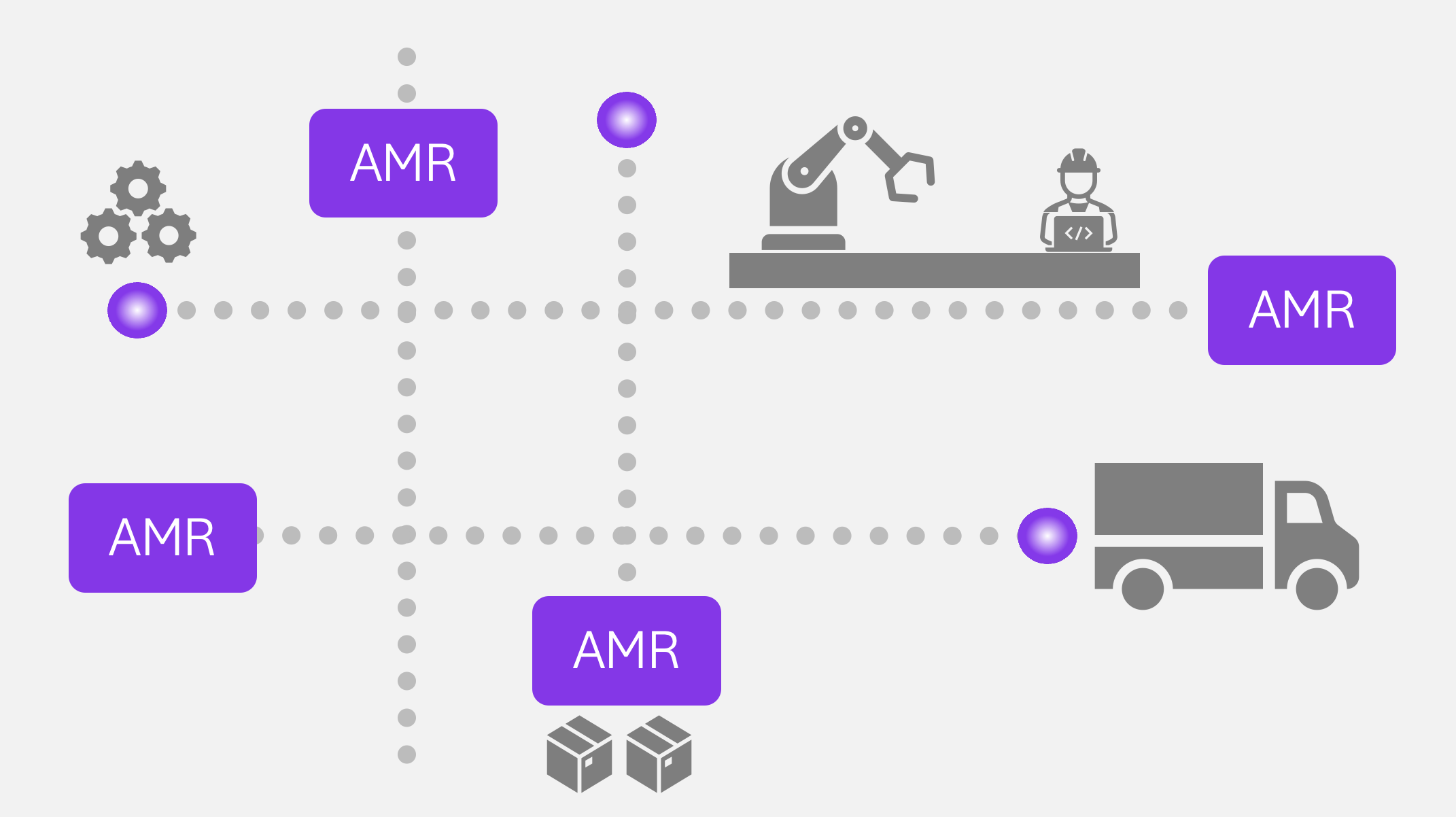
How easy it is to make changes to the AMR and AGV’s map, workflow, and fleet size?
01/02
It’s easy to reconfigure the map, change workflows and tasks, and add new and mixed robots to an existing fleet.
Frequently asked questions
- Which is more cost-effective: AGVs or AMRs?
While AGVs typically have lower initial purchase costs, AMRs are often more cost-effective in the long term, offering a lower Total Cost of Ownership (TCO) due to their minimal infrastructure requirements and faster, less costly reconfigurability.
- How long does it take to deploy an AMR versus an AGV system?
Implementation time is a critical factor for manufacturers. AGVs require weeks or months for physical infrastructure installation, while AMRs can be mapped and deployed in a matter of days.
- How do AMRs and AGVs handle unexpected obstacles in the path?
This is the single biggest operational difference. Think of AMRs like a car and AGVs like a train. AGVs stop and wait (like a train on a fixed track), while AMRs use intelligent navigation (AI) to slow down, reroute, and navigate around obstacles (like a car).
- Which is better for dynamic, frequently changing warehouse environments?
AMRs are preferred for dynamic environments because they utilize intelligent navigation to detect and reroute around unexpected obstacles like dropped pallets or foot traffic, ensuring operational continuity. AGVs, by contrast, are forced to stop completely.
- Can AGVs and AMRs be easily scaled and reconfigured?
Scalability is crucial for long-term planning. Scaling AMRs (adding more robots or routes) is simply a software update, while scaling AGVs requires expensive and time-consuming physical infrastructure modifications.
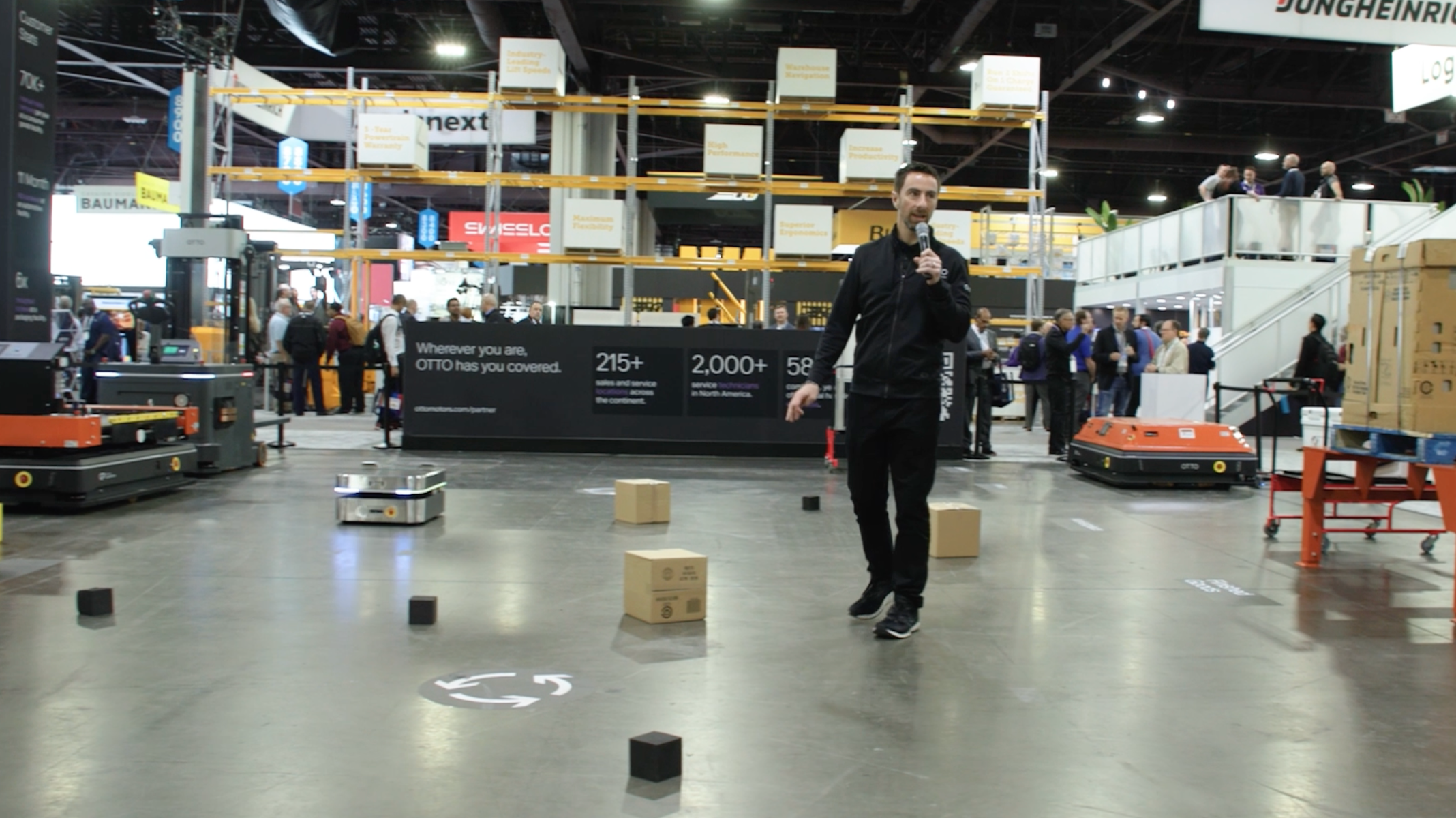
See how AMRs navigate obstacles safely and efficiently
Watch this interactive session where audience members throw obstacles in the OTTO's path to see how the AMRs react to unplanned challenges.
Calculate your AMR ROI
Check out OTTO's ROI calculator to find your payback period.