Blog
How to estimate ROI when building your AMR business case
Autonomous mobile robots (AMRs) can transform production lines by improving efficiency, safety, and flexibility—but realizing those benefits requires careful planning and a strong business case. Making the case for AMRs is a structured process that helps manufacturers identify the right solution and set the foundation for a successful deployment.
Once an AMR vendor has been chosen and validated, the next step is to estimate potential Return on Investment (ROI). Cost is one of the most influential factors in any technology investment, and a clear ROI projection is essential to gaining stakeholder buy-in.
While every manufacturer approaches this calculation differently, here are the key considerations to keep in mind when estimating ROI for your own AMR business case.
Cost inputs from your AMR vendor to calculate ROI
Estimating ROI involves comparing cost inputs from your AMR vendor against the current costs of your material transport process. These inputs are typically outlined in the vendor’s full solution quote and form the foundation of your financial model.
To build a strong business case, be sure to request the following key inputs to calculate an accurate ROI timeframe:
- Expected number of AMRs and cost per unit
- Cost of software and upgrades
- Cost of deploying the solution (installation, commissioning, testing)
- Cost of chargers and their infrastructure
- Training costs for operators and maintenance teams
- Post-implementation service and support costs
- Cost of attachments required
- If applicable, cost of additional network infrastructure costs, and any possible WMS/ERP integration or system integrator costs
Some of these are fixed capital costs, such as price per robot, while others may be ongoing operational expenses like their support models. Every vendor structures their costs differently, so it’s important to understand which line items fall into each category.
To help ensure accurate ROI projections, your chosen AMR vendor should offer simulation services. This service not only helps validate the expected number of AMRs, but it also enables you to visualize how the solution will be customized to your facility’s unique requirements.
Cost inputs from your team to complete your AMR ROI model
Every manufacturer’s internal costs look a little different, and the inputs you include in your ROI model will depend on your current material transport process. The examples below outline some of the costs you may want to consider or compare against when estimating ROI.
- The number of manual material transport personnel per workflow, per shift
- Your number of hours per shift and shifts per week
- The full cost to employ your material transport personnel, including wages, taxes, benefits, supplies (including PPE), insurance, facility damage, and other expenses, also known as the total burden rate or cost
- The cost of leased equipment, including associated maintenance costs
- The number of workplace accidents, and the associated lost materials and cost of workers' compensation claims
- Your turnover rate, and the associated cost to hire and train new material transport personnel
- Your operating days per week and weeks per year
Cost savings are often a major driver behind automation deployments in some of the world’s largest manufacturing facilities. For example, Sunview Patio Doors achieved ROI within just 16 months after introducing AMRs to move finished products from end-of-line to the warehouse. Similarly, GE Aerospace realized $1.3 million in savings within a year of deploying AMRs for mobile machine tending.
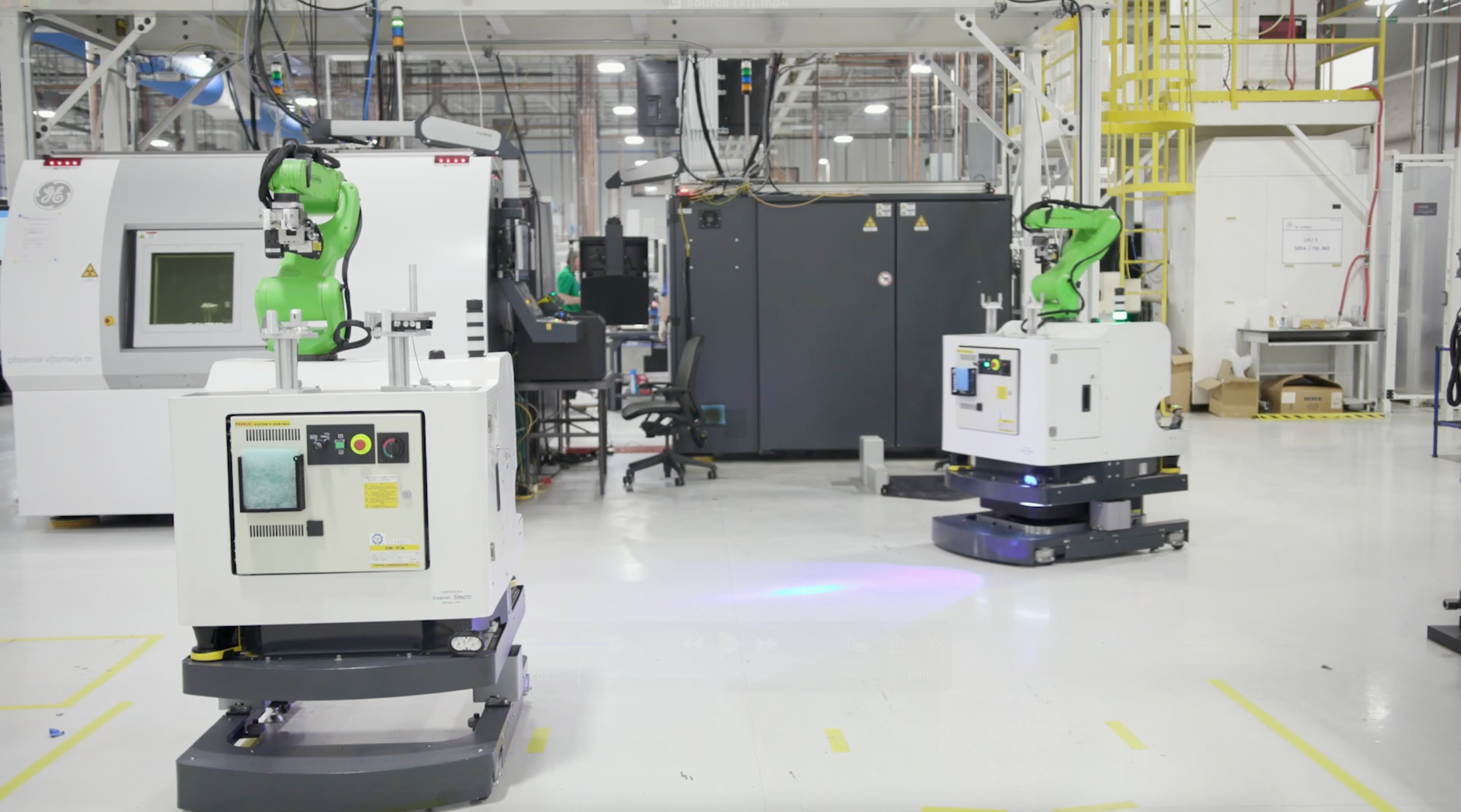
Video 1: GE Aerospace achieved $1.3M in savings within a year of deploying OTTO AMRs for mobile machine tending.
While ROI is a critical part of your AMR business case, it’s only one piece of the selection process. To explore the other key factors that contribute to a successful deployment, join our webinar, “Making the case for autonomous mobile robots in connected operations,” on November 12 at 1:00 p.m. ET.
Subscribe to our newsletter
Stay in the loop on product news, case studies, upcoming events and more.
Please allow all cookies to access this form.