Blog
Your guide to a successful AMR deployment in 2026

If deploying autonomous mobile robots (AMRs) is on your 2026 roadmap, start the year by learning what’s required to deploy AMRs effectively in your facility.
From confirming AMRs are the right fit, to understanding the buying process, to learning from experts who deploy AMRs every day, this blog brings together the insights you need.
1. Confirm AMRs are the right fit for your facility
Before you evaluate vendor capabilities and begin building a business case, you need clarity on what challenges you’re looking to solve and whether AMRs are the right fit for your operation. Some of the key challenges AMRs help solve include:
- Improving safety and reallocating workers to higher value-added tasks
- Increasing efficiency/productivity and flexibility
- Optimizing floor space usage and reducing costs
Learn more about why you should implement AMRs in this blog.
Once you know AMRs can solve your challenges, it’s important to consider if they’re the best material handling solution for the job. This blog compares AMRs and automated guided vehicles (AGVs) on the basis of flexibility, scalability, redeployability, intelligence, and ease of use, so you can discover which technology best aligns with your facility needs.

Image 1: AGVs are often stuck when an obstacle blocks their path, while AMRs have the flexibility to drive around the blockage.
Finally, before you dive into the AMR selection journey, it’s essential to confirm that you have the budget and internal resources to support deployment. That means knowing what costs are associated with the technology, and calculating an estimated payback period to help you build early stakeholder buy-in. Learn more in this blog.
2. Understand the AMR selection process
Once you’ve confirmed technology fit, the next step is understanding what the journey looks like end to end. The manufacturer’s playbook for AMR selection breaks down the five-stage buying process, from problem and solution identification through building and submitting a tailored business case. You’ll learn how to evaluate vendors, avoid common risks, and secure internal alignment. If you’ve worked through the considerations in section one, you’re already well on your way to completing the first stage of this process.
3. Learn best practices from the experts before you get started
Before you select a vendor, it’s important to understand what actually drives successful AMR deployments. That means learning proven deployment strategies, identifying workflows where AMRs deliver the most value, and understanding the technical best practices that support reliable operations. The AMR starter series: A manufacturer’s guide brings those insights together in a three-part webinar series led by field experts who deploy and support AMR solutions in manufacturing environments worldwide. Whether you’re actively evaluating automation solutions or just starting to explore AMRs, this series will help you plan and make informed decisions with confidence.
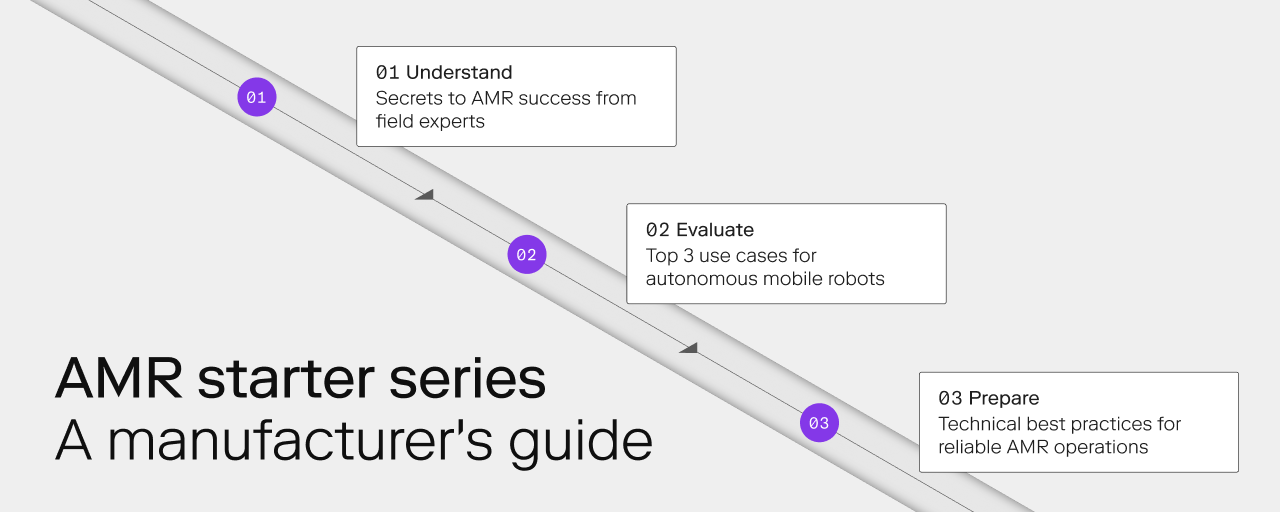
Image 2: In the AMR starter series, discover the secrets to AMR success, the top 3 use cases, and the technical best practices for reliable operations.
Deploying AMRs in 2026 starts with clear evaluation, informed planning, and expert insights. If you’re ready to take the first step, Part 1 of the AMR starter series, “Secrets to AMR success from field experts,” goes live on January 27 at 1pm ET. In this panel, two experts share practical insights on what works—and what doesn’t—in the most successful AMR deployments. Register for Part 1 here or sign up for the whole series here.
Subscribe to our newsletter
Stay in the loop on product news, case studies, upcoming events and more.
Please allow all cookies to access this form.