Blog
How a manufacturing facility improved space utilization by 70% with production logistics
Manufacturers are increasingly moving beyond individual automation technologies and toward connected operations that increase production capacity by improving material flow and reducing downtime. At scale, these gains depend on how efficiently materials move across the production line.
At Rockwell Automation’s 250,000 sq. ft. Twinsburg, Ohio manufacturing facility, material flow challenges were impacting production efficiency and scalability. To address this, the site implemented a multi-phase production logistics deployment combining OTTO autonomous mobile robots (AMRs) with FactoryTalk Orchestration to automate material movement and coordinate logistics in real time.
Manual material movement caused inefficiencies and constrained production flow
Prior to deployment, movement of production materials at the facility relied heavily on manual cart transport. Approximately 52% of daily material movement trips were completed manually, increasing labor requirements, creating process inefficiencies, and contributing to excess work-in-process (WIP) inventory.
To compensate for delays in material flow, additional floor space was dedicated to staging inventory, thus increasing operational constraints and limiting the facility’s ability to scale production efficiently.
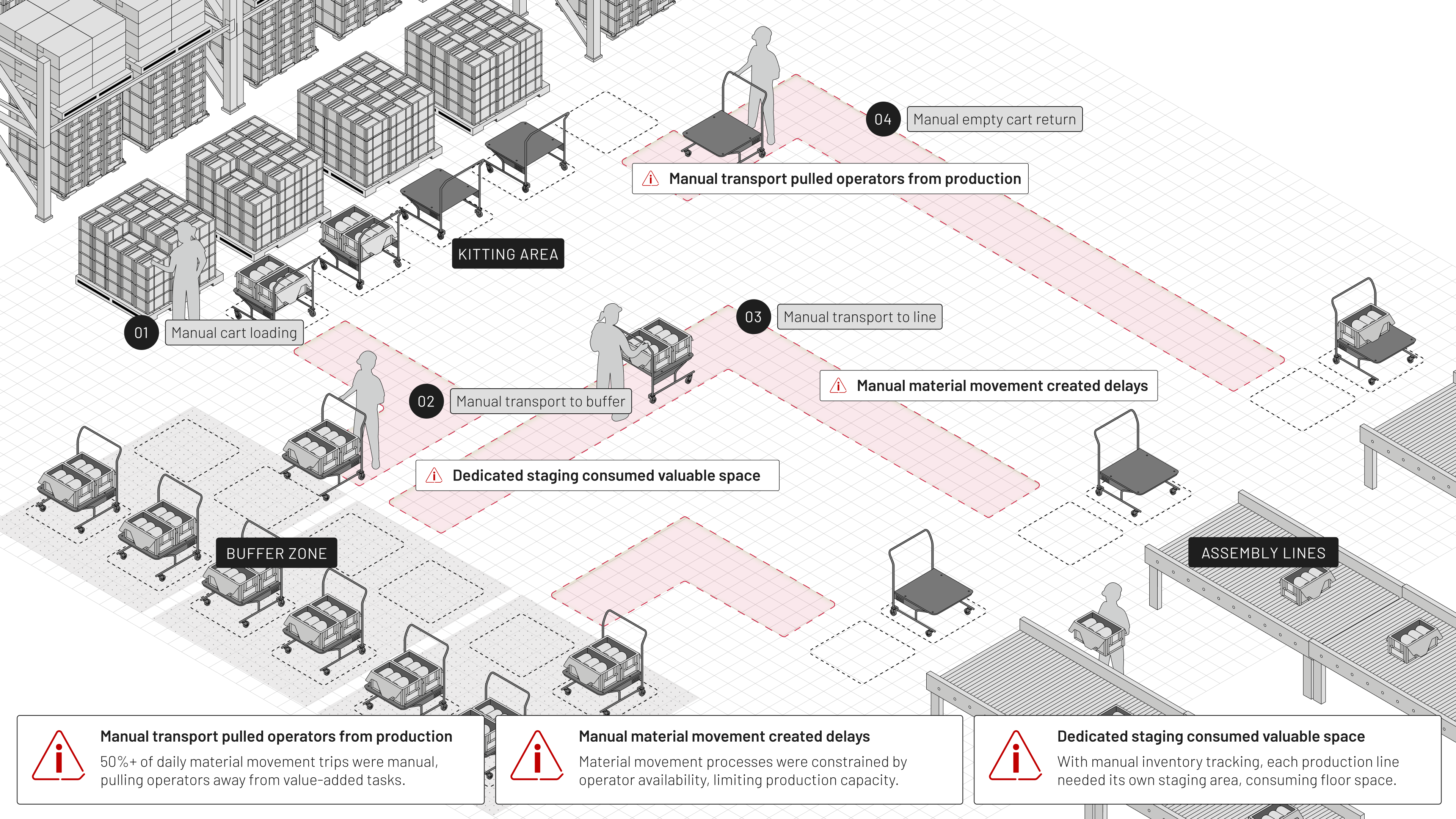
Image 1: A diagram of the Twinsburg workflow before any automation was deployed.
To address these challenges, Rockwell launched a multi-phase production logistics solution.
Phase 1: AMRs save the Twinsburg plant $162,000 annually
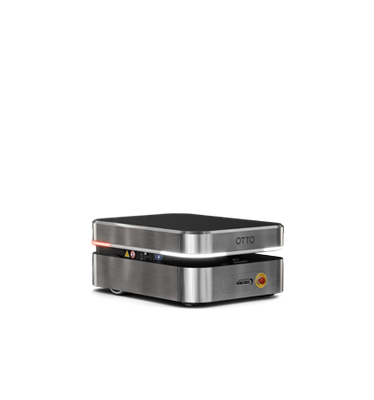
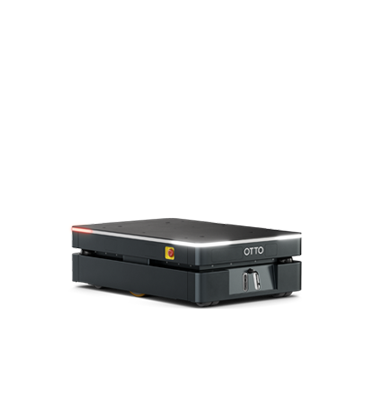
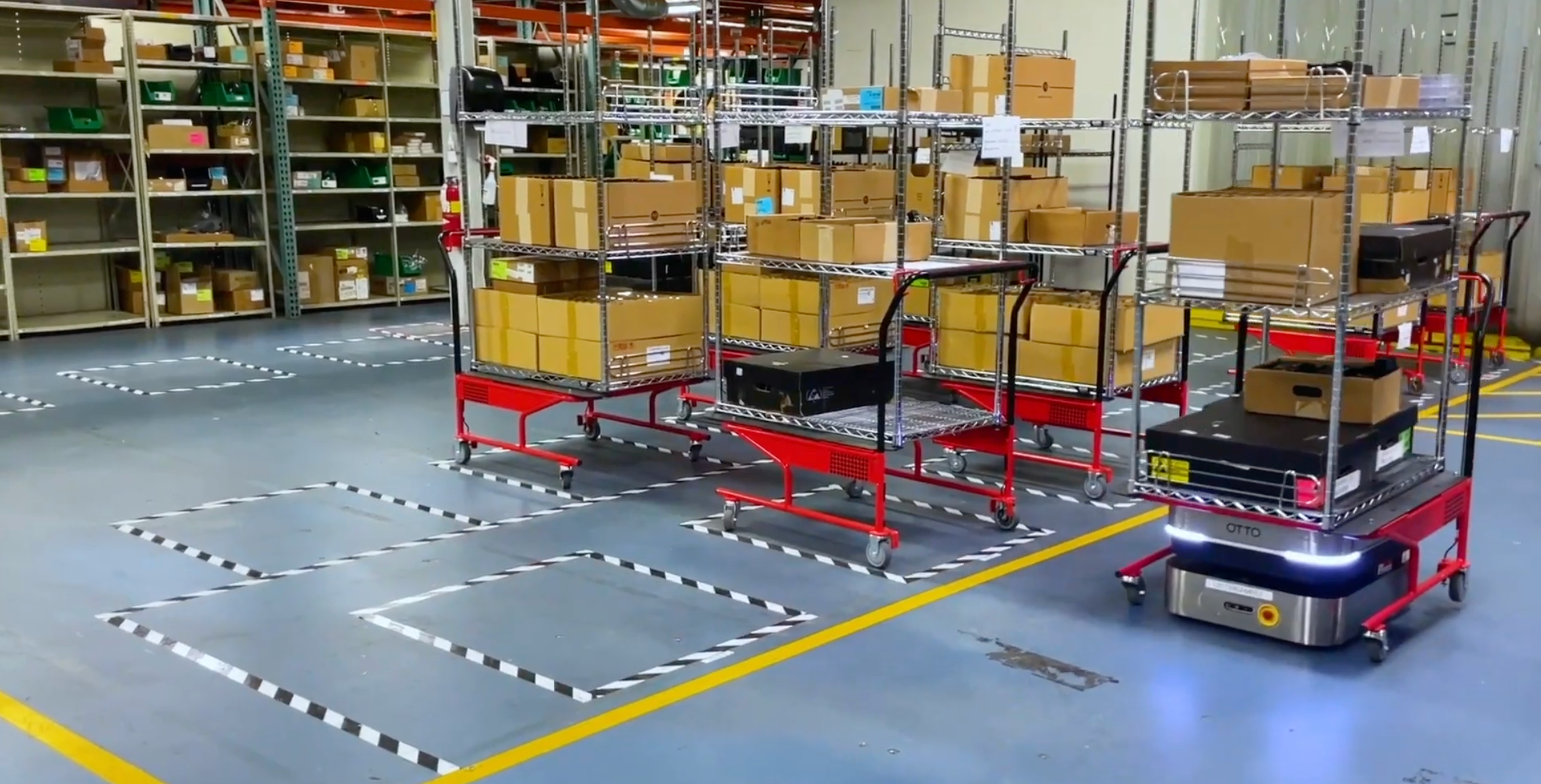
In phase one, three OTTO 100 AMRs and forty carts were deployed to automate material transport between production areas. This immediately reduced dependence on manual cart movements and improved efficiency.
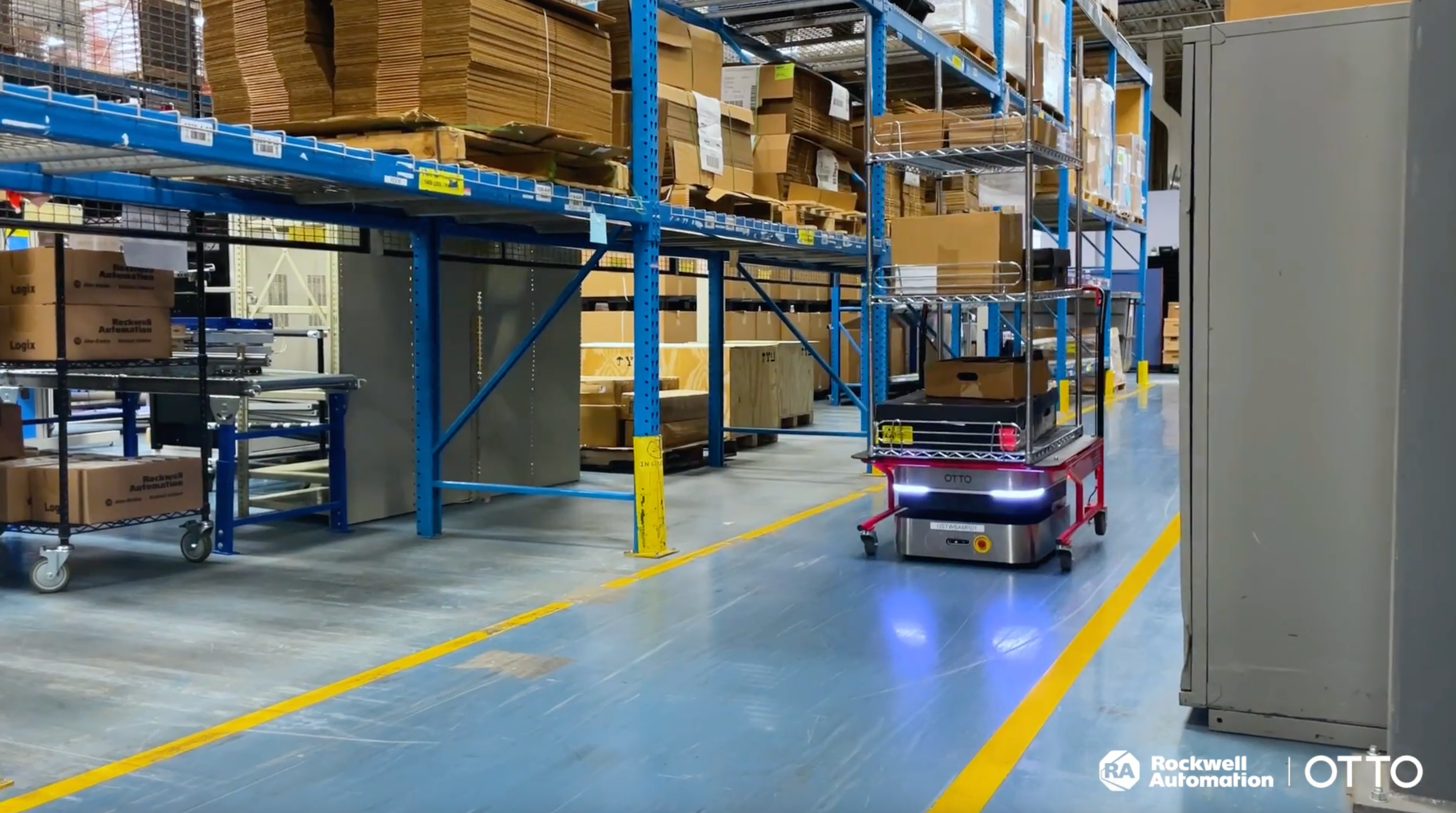
Video 1: OTTO AMRs in action at the Rockwell Automation Twinsburg facility.
By automating internal logistics, Rockwell realized annual labor savings of $162,000 while improving material flow consistency and reducing non-value-added operator activity.
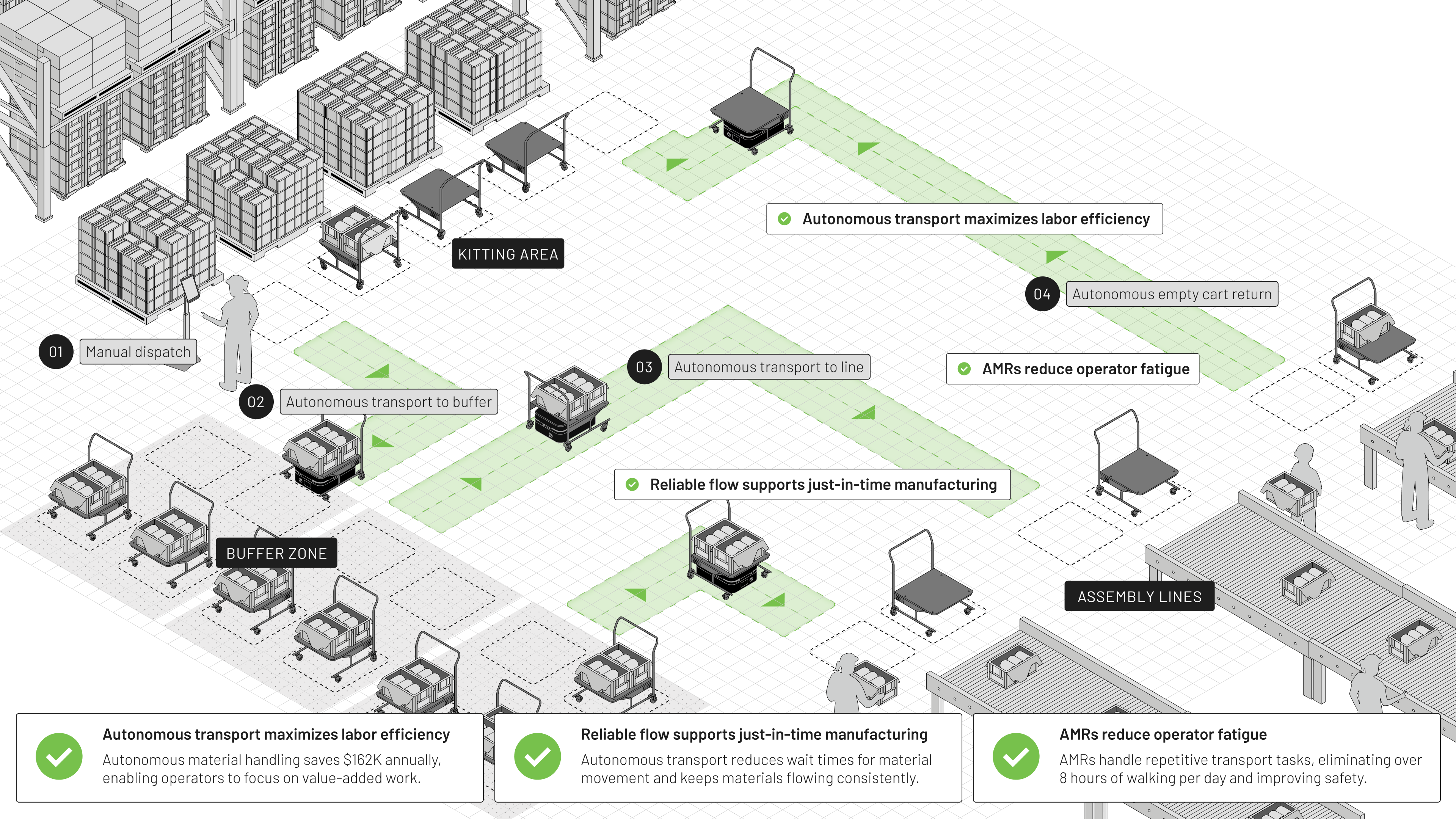
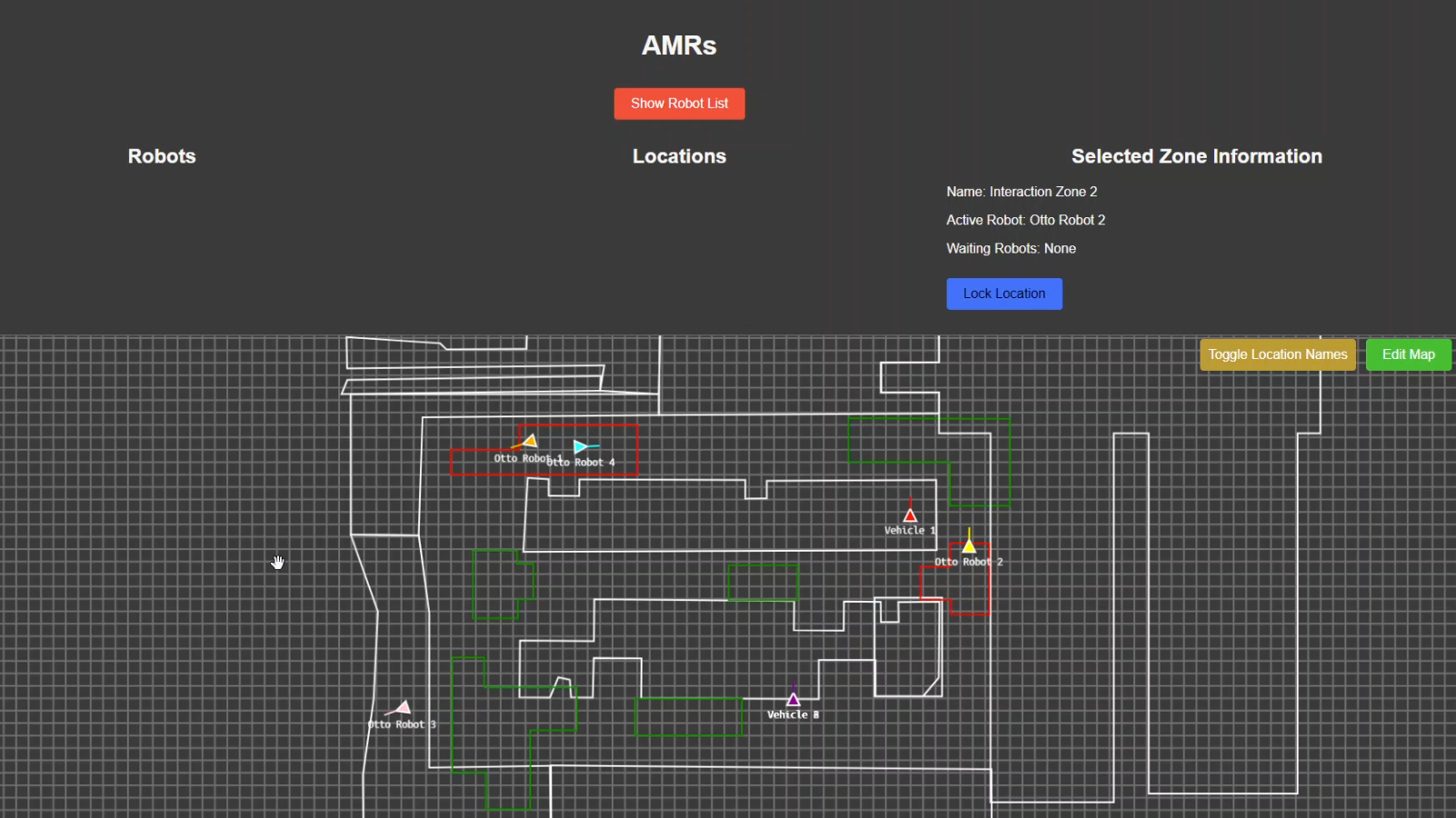
Image 2: This is what the Twinsburg deployment looked like after phase 1 was initiated.
Phase 2: FactoryTalk Orchestration helps increase space utilization by 70%
Shortly thereafter, Rockwell expanded its autonomous approach. While material movement had been automated, operators still needed to manually request robot missions, and each production line required dedicated pick-up and buffer areas to track materials. These manual processes consumed valuable floor space and prevented the plant from fully realizing autonomous operations.
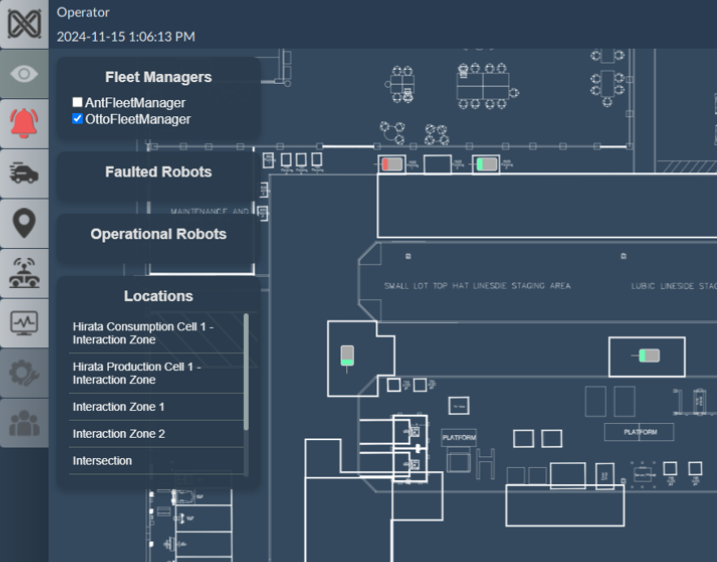
In response, Rockwell advanced to phase two with the deployment of FactoryTalk Orchestration. This solution connected the plant’s manufacturing execution system (MES) directly with OTTO Fleet Manager to automate material transport based on real-time production status. Using configurable, rule-based workflows, the system automatically dispatched robots as production orders progressed through manufacturing.
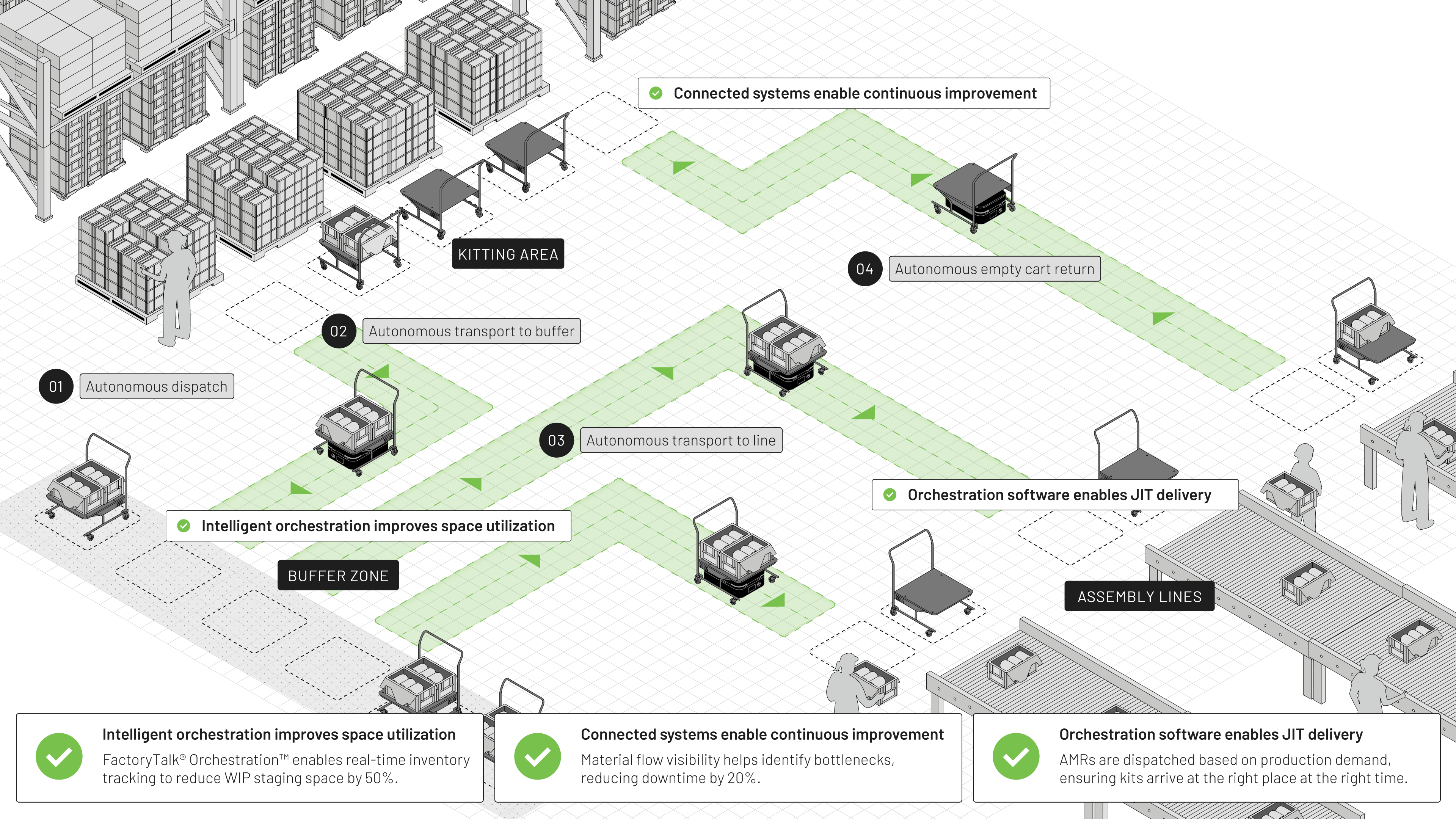
Image 2: What Twinsburg looked like with phase 2 deployed.
By automating and orchestrating material flow, Rockwell’s Twinsburg facility achieved:
0%
increase in space utilization for pick-up and staging zones
0%+
reduction in floor space previously used for staging orders
0%
reduction in production line downtime through timely kit delivery
In addition to delivering an estimated $1 million in impact, the deployment:
- Improved material flow
- Reduced work-in-process inventory
- Increased overall equipment effectiveness (OEE)
- Lowered scrap rates
- Improved employee safety
To learn more about the Twinsburg deployment, watch the on-demand webinar “Improving space utilization by 70% with production logistics.”
Subscribe to our newsletter
Stay in the loop on product news, case studies, upcoming events and more.
Please allow all cookies to access this form.