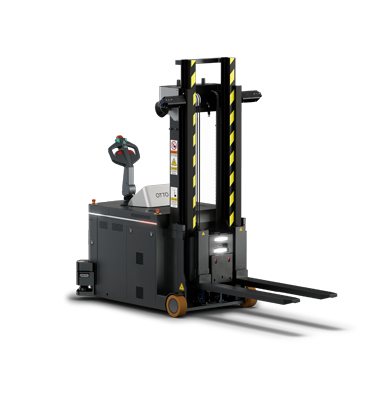
EVENT RESOURCES
Your journey to autonomous workflows starts here
Thank you for visiting the OTTO booth. Explore these resources as you evaluate autonomous material handling solutions for your facility.

Level up your material handling
OTTO by Rockwell Automation is a leader in autonomous material handling, providing intelligent, flexible, and scalable solutions that optimize material movement in manufacturing and warehouse environments. OTTO autonomous mobile robots (AMRs) are designed to improve productivity, reduce operational costs, and enhance workplace safety by automating low-value manual transport tasks.
GET A GUIDED TOUR
Enter the OTTO demo space and experience safety first-hand during our guided tours at 1:00PM, 2:00PM and 3:00PM.
ORDER MERCH
Get your OTTO merch delivered autonomously to you through an integrated workflow.
CATCH THE HALFTIME SHOWS
Learn how software and hardware work in harmony to enhance safety and productivity during the interactive demos at 10:30AM and 1:30PM.
FAQs
New to AMRs?
Find answers to the most common questions we hear from manufacturers considering AMRs for the first time.
- What's the difference between AGVs and AMRs?
Automated guided vehicles (AGVs) and autonomous mobile robots (AMRs) are often confused for one another but are inherently different. Each system operates with fundamentally different technology and therefore have different capabilities and applications.
- AGV: An AGV is an unmanned electric vehicle that is controlled by pre-programmed software to move materials around a facility. AGVs rely on guidance devices such as magnetic tape, beacons, barcodes or predefined laser paths that allow the AGV to travel on fixed paths in a controlled space. Lasers and sensors detect obstacles in its path and trigger the vehicle to stop automatically.

- AMR: An AMR is a robot in which operation occurs without direct driver input or pre-configured scripts to control the steering, acceleration, and braking. Within an industrial environment, an AMR utilizes laser-based perception and navigation algorithms to dynamically move through facilities, infrastructure-free. Machine learning capabilities enable the robot to become more efficient and accurate as it encounters new situations.
Read this blog to uncover the five advantages AMRs deliver in comparison to AGVs.
- What material handling workflows can I automate with AMRs?
As you consider AMRs for your facility, the first step is identifying the workflow you want to automate to determine which AMR solution is best suited to meet your needs.
- Workcell delivery
- Picking to packout or consolidation
- Work-in-progress (WIP) transport
- Lineside delivery
- Palletizer to stretch wrapper
- Finished goods transport
- Inbound/outbound storage
- Cross-dock transfer
Read this blog to learn more about the workflows you can automate with AMRs.
- Which operational challenges can AMRs solve?
Amid an increasingly competitive market and complex supply chain, manufacturers are turning to AMRs to solve these top 4 challenges:
- Improve safety
- Increase efficiency and reduce long-term costs
- Improve flexibility and floor space utilization
- Reallocate labor to higher value-add tasks
Read this blog to learn how AMRs are solving these core challenges for manufacturers.
QUIZ
Which AMR is right for me?
Discover the right AMR for your use case in less than a minute.
Click the button below and select "Which AMR is right for my needs?" to get started.
FAQS
Evaluating AMR solutions?
Uncover insights that will help build confidence in your decision-making process as you evaluate which AMR solution is best suited for your needs.
- What's the most effective way to evaluate AMR solutions at a trade show?
The most effective way to assess multiple AMR solutions at once is by attending industry trade shows. Each AMR provider will demonstrate their fleet differently at trade shows, which can be revealing of their capabilities.
When walking the show floor to evaluate AMR solutions, we recommend looking for these six signs of confidence in robot demos:
- Is their fleet management software shown or hidden?
- Are the AMRs driving on concrete, or did they install flooring on top?
- Are the AMRs stationary or moving?
- Are there multiple robots sharing the same space, or are they isolated?
- Is an employee glued to their laptop watching the demo?
- How safe is the AMR demo?
Read the blog or watch the video to learn more.
- How do I evaluate whether AMRs will integrate seamlessly with my existing systems?
To get the most from AMRs, look for a solution that integrates centrally with your existing business management systems, hardware, and material handling systems. Centralized integration streamlines deployment, simplifies day-to-day management, and ensures your automation systems work in sync to reduce downtime and manual effort.
Below are three integrations your AMR vendor should provide:
- Ensure continuous productivity by connecting with your existing business management systems
- Improve safety by communicating with existing PLCs
- Collaborate seamlessly with other material handling systems
Read the blog to learn more.
- How do I ensure I'm selecting the right AMR solution for my facility?
There's a lot to consider in selecting the right AMR solution—understanding what to evaluate and how to assess your options is crucial for a successful deployment that meets your efficiency ands safety goals.
Here are some helpful resources you can leverage to ensure you're making the best choice for your facility:
- Identify which AMR provider is best suited to automate your material handling workflows using these 8 key considerations.
- Assess the software capabilities behind AMR solutions with a comprehensive list of questions you can ask your shortlisted vendors in this software evaluation questionnaire.
- Unlock expert insights as you navigate the AMR selection process with this five-stage guide.
If you prefer to speak with an AMR advisor, fill out the form below.
DOWNLOADS
Data sheets
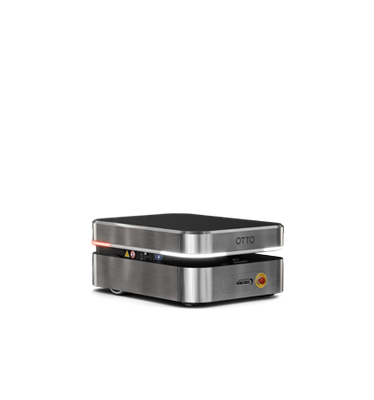
OTTO 100 Data Sheet
.pdf [1595 KB]
.pdf
[1595 KB]
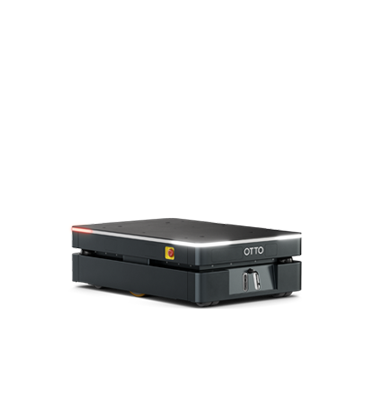
OTTO 600 Data Sheet
.pdf [759 KB]
.pdf
[759 KB]
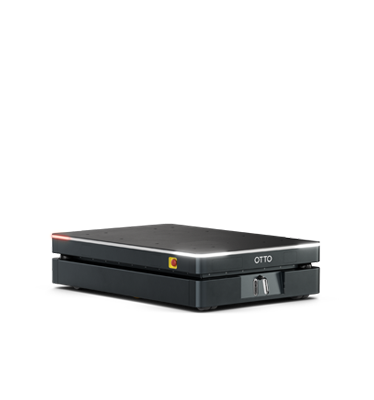
OTTO 1200 Data Sheet
.pdf [1774 KB]
.pdf
[1774 KB]
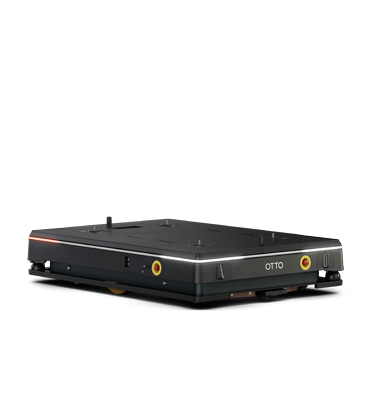
OTTO 1500 Data Sheet
.pdf [1574 KB]
.pdf
[1574 KB]
OTTO Lifter Data Sheet
.pdf [869 KB]
.pdf
[869 KB]
OTTO Fleet Manager Brochure
.pdf [955 KB]
.pdf
[955 KB]
OTTO Corporate Brochure
.pdf [883 KB]
.pdf
[883 KB]
Start building your autonomous workflows today.
Please allow all cookies to access this form.